Conference Information
Introduction Organizing Committee Important Dates Program and Keynote Speakers Travel Information Contact
Keynote Speaker
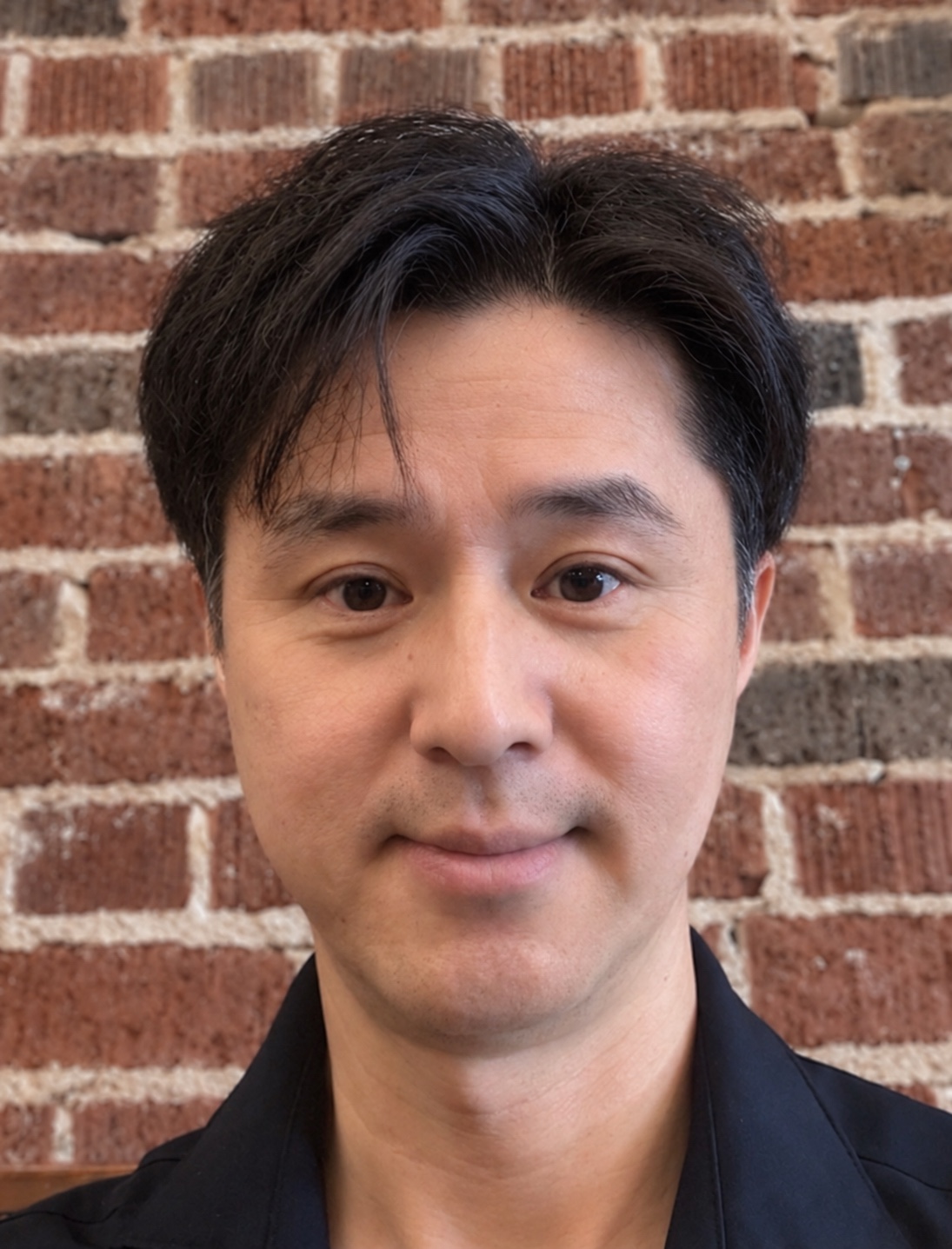
Jinho Cha, PhD
Academic Rank and Degrees:
Faculty, Department of Computer Science, Gwinnett Technical College, United States. PhD in Industrial Engineering, Clemson University; MS in Industrial Engineering, University of Florida; MS in Industrial Engineering, Texas A&M University; BS in Electronic Engineering, Korea Military Academy.
Areas of Expertise:
Business analytics; operations and decision sciences; artificial intelligence and machine learning; predictive-prescriptive analytics; stochastic, robust, and inverse optimization; statistical modeling; simulation; revenue management; supply chain and logistics analytics; healthcare analytics; and data-driven decision systems.
Academic contributions
Dr. Jinho Cha develops quantitative decision systems at the intersection of business analytics, operations research, industrial engineering, and artificial intelligence. His research combines machine learning, statistical modeling, simulation, and optimization to support reliable decisions under uncertainty and changing operating conditions.
His recent research has appeared in or been accepted by IISE Transactions, Computers & Industrial Engineering, BMC Public Health, and the Journal of Industrial and Management Optimization. He also has multiple manuscripts under review in operations management and AI-related venues, including Manufacturing & Service Operations Management, Production and Operations Management, European Journal of Operational Research, Pattern Recognition, Journal of Machine Learning Research, and ICLR 2027.
One recent contribution, “Dynamic Inverse Optimization under Drift and Shocks: Theory, Regret Bounds, and Applications,” was accepted by IISE Transactions. His current AI research also examines large-language-model reasoning, black-box AI decision systems, and the integration of prediction with implementable decision policies.
Contributions of initiatives and policies
Through research on e-learning, online service quality, technology acceptance, e-commerce, and digital banking, Dr. Pham Long provides empirical evidence that helps organizations design and improve user-centric digital services. In higher education, his research findings can support the formulation of digital transformation strategies, the enhancement of online and hybrid learning quality, and the improvement of student satisfaction and engagement, as well as the establishment of quality assurance mechanisms amidst the integration of AI and automation.
Studies on the usage behavior regarding new technologies—including ChatGPT—in learning environments also contribute to discussions on digital literacy, AI readiness, academic integrity, faculty support, and the governance of technological innovation within higher education institutions.
Other notable contributions
Dr. Cha combines academic research with extensive leadership and analytical experience in the Republic of Korea Army, where his final rank was Colonel. He served on the faculty of the Korea Military Academy, worked in operations analysis and operations research at Army Headquarters and the Joint Chiefs of Staff, served in the Army Training and Doctrine Command, and later worked as a Senior Researcher at the Korea Research Institute for Defense Technology Planning and Advancement.
At the Korea Military Academy, he taught probability, statistics, linear algebra, linear programming, and calculus while participating in AI, simulation, human-resource selection, training-system, and organizational-culture projects. He also served as Head of Strategic Planning at the Army Culture Innovation Center. His public-service recognitions include Presidential, Ministerial, Army Chief of Staff, Korea Military Academy Superintendent, and Chairman of the Joint Chiefs of Staff commendations. He currently teaches programming and computational problem solving at Gwinnett Technical College.
Proposed Seminar Presentation
“AI-Ready Higher Education: Curriculum Modernization under Changing Labor-Market Demand”
The presentation will examine how universities can decide where curriculum modernization should begin when artificial intelligence is changing work unevenly across occupations and institutional redesign capacity is limited. Using recent U.S. higher-education and labor-market evidence, it will connect academic programs with AI exposure, projected employment growth, and occupational openings to construct field-level adaptation priorities.
The presentation will also introduce a portfolio perspective in which universities allocate limited curriculum-redesign capacity selectively rather than applying the same modernization effort to every program. The broader implication is that AI readiness requires evidence-informed adaptation, alignment with changing skill demands, and strategic use of institutional resources while preserving academic judgment and avoiding the assumption that high AI exposure necessarily implies occupational decline.