
Conference Information
Introduction Organizing Committee Important Dates Program and Keynote Speakers Travel Information Contact
Keynote Speaker
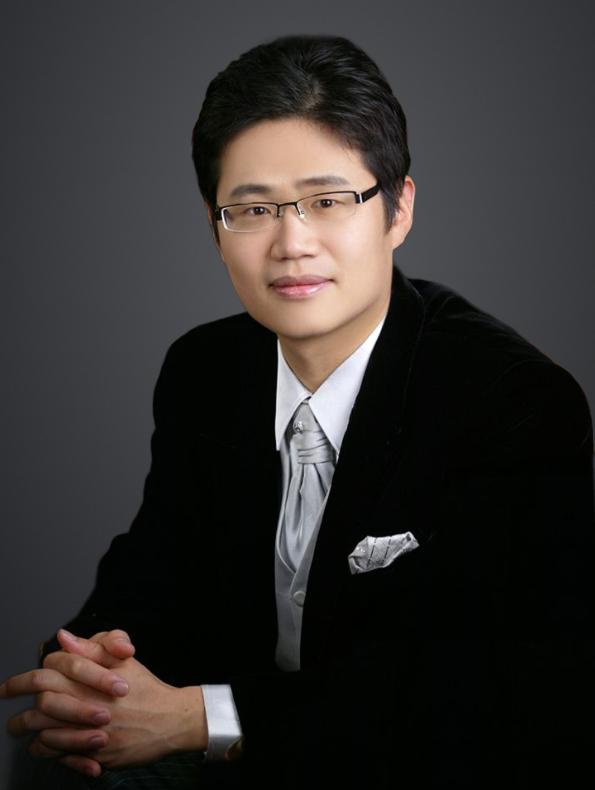
Assistant Professor Sahng Min Han, PhD
Academic Rank and Degrees:
Assistant Professor of Computer Science, Department of Computer Science, School of Computing, Middle Georgia State University, United States. PhD and MS in Biomedical Engineering, and MS in Electrical and Computer Engineering, University of Florida, United States. BS in Electrical Engineering, Chungnam National University, South Korea.
Areas of Expertise:
Machine learning and deep learning; biomedical signal and image processing; cognitive neuroscience; AI-assisted medical diagnosis; learning from small and imbalanced data; quantitative modeling of decision-making in business and operations; physical AI; and computer science education, including programming pedagogy and assessment in the age of generative AI.
Academic contributions
Dr. Sahng Min Han is an interdisciplinary researcher whose work follows a single question across disciplines: how intelligent systems, both biological and artificial, process information, adapt under constraint, and support human decision-making. Grounded in electrical and biomedical engineering, Dr. Han approaches problems from a signal-processing and systems perspective, in domains ranging from the human brain to clinical AI and business decision-making.
Dr. Han’s research began in cognitive neuroscience. Using electroencephalography (EEG) and signal-analysis methods, Dr. Han studied how the brain regulates information processing. Work published in Frontiers in Human Neuroscience, examining visual spatial attention and verbal working memory, showed that frontal brain regions regulate activity in visual cortex from the top down through alpha oscillations, and that the regions issuing these control signals differ by task. Work published in the Journal of Clinical and Experimental Neuropsychology examined cognitive impairment induced by an antiseizure medication, showing that when the drug reduces the efficiency of the brain’s primary working-memory network, the brain recruits additional regions to maintain performance.
Building on this foundation, Dr. Han extended the same analytical approach from biological to artificial intelligence, developing deep-learning methods for medical diagnosis under conditions common in real clinical practice—scarce, imbalanced, and noisy data—and applying them to the diagnosis of Mpox skin lesions. This line of research began with a vision-transformer–based diagnostic model published in Diagnostics and was extended by Dr. Han as lead author of “FOSSIL: Regret-Minimizing Curriculum Learning for Metadata-Free and Low-Data Mpox Diagnosis,” which proposes a curriculum-learning framework that trains models progressively from easier to harder cases, with an emphasis on rigorous evaluation.
Through collaboration with researchers at other universities, including Associate Professor Long Pham of Texas A&M University–Corpus Christi, Dr. Han has extended this work into business and operations—examining how technology readiness shapes customer satisfaction and loyalty in mobile banking (Journal of Risk and Financial Management) and developing mathematical models for optimizing smart-contract and automation adoption under uncertain demand and risk.
At Middle Georgia State University, Dr. Han is building new cross-disciplinary collaborations with biochemistry and biology faculty that apply machine learning to molecular and microbiome data.
Contributions of initiatives and policies
Before joining Middle Georgia State University, Dr. Han served as Program Director of Computer Programming at Gwinnett Technical College, leading curriculum development and faculty hiring and working with an industry advisory board to align the curriculum with workforce needs.
Dr. Han also served as Principal Investigator of “Fast-Track to Full Stack: Empowering Junior Developers,” a project to accelerate students’ growth into full-stack developers, and as Co-Principal Investigator of “Smart Grader: An AI-Driven Code Assessment and Feedback System with Blockchain Logging,” both funded by the National IT Innovation Center (NITIC).
Long before generative AI arrived, Dr. Han introduced regular technical interviews into programming courses to address a long-standing problem in computer science: students copying code from classmates or online sources. By having students explain and modify their own code, the interviews verified authentic authorship while strengthening genuine understanding and engagement. As generative AI has made this problem far more widespread, the approach has become even more valuable, and this experience forms the practical foundation of the proposed seminar.
Dr. Han currently teaches Computer Science I and II, Python Scripting, and Experiential Learning in Computer Science. Beyond the classroom, Dr. Han is working to expand teaching and research into physical AI, including humanoid robotics, and is collaborating with other departments on campus on interdisciplinary projects that bring computing into a range of fields. Dr. Han also contributes to departmental discussions on the online Python textbook and AI-supported interactive self-learning, advocating for consistent course materials, regular formative assessment, and secure practices for major exams.
Other notable contributions
As faculty advisor to the Women in Technology (WiT) club at Gwinnett Technical College, Dr. Han promoted gender diversity in technology fields and mentored students; the club was named Georgia’s statewide Club of the Year. Dr. Han also co-founded the Innovation and Programming (IP) Club, the college’s first AI-focused student club, fostering hands-on, project-based learning in artificial intelligence and industry-aligned technologies. In addition, Dr. Han coached students to consecutive gold medals in computer programming at the SkillsUSA Georgia State Championships.
Dr. Han previously served as an instructor at the Republic of Korea Air Force Academy and as an interpreting officer at the Republic of Korea Air University, building an educational career that spans both South Korea and the United States. Fluent in Korean and English, Dr. Han maintains close ties with academic communities in both countries.
Proposed Seminar Presentation
Proposed title:
“Teaching Through the Temptation of AI: Interview-Based Assessment in Computer Science and Beyond”
Generative AI can now complete most introductory programming assignments almost instantly. As a result, a submitted program is no longer reliable evidence of a student’s understanding, and AI-detection tools are not reliable enough to support academic-integrity decisions. Drawing on insights from cognitive neuroscience about attention and learning, the presentation will explain why productive struggle is essential to building skill and how habitual reliance on AI can quietly erode the learning that assignments are designed to develop.
The presentation will then introduce interview-based assessment as a practical response. In short, structured conversations, students explain, trace, modify, and debug their own code, revealing genuine understanding that a finished product alone cannot show. Drawing on classroom experience, the presentation will share interview formats, scoring rubrics, and strategies for scaling the approach to larger classes, as well as policies that permit disclosed AI use while still verifying student understanding.
The approach is not limited to computer science. It extends to business, accounting, health sciences, and writing-intensive courses—any field in which students can be asked to explain their reasoning. The presentation will also discuss implications for academic-integrity policy, faculty workload, fairness for non-native speakers and students with presentation anxiety, and accessibility.
The core message is that, in the age of AI, assessment should shift from grading the product to verifying the process and understanding behind it—embracing AI as a learning tool while ensuring that the learning itself remains the student’s own.